Mark Twain wrote that Varanasi was 'older than history, older than tradition, older even than legend, and looks twice as old as all of them put together' — and that was in 1897, one hundred and twenty-eight years ago.
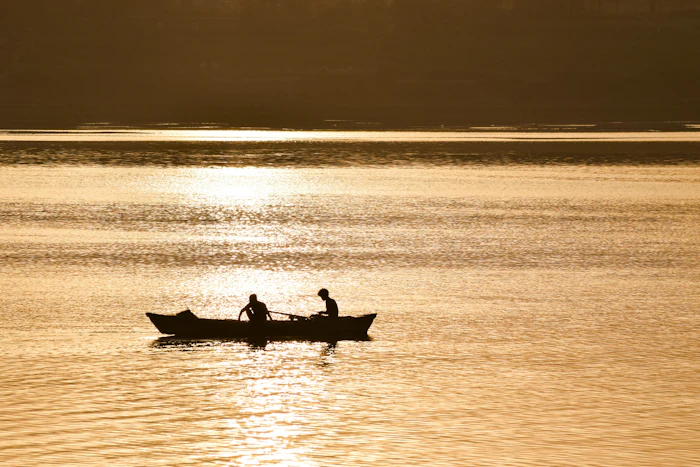
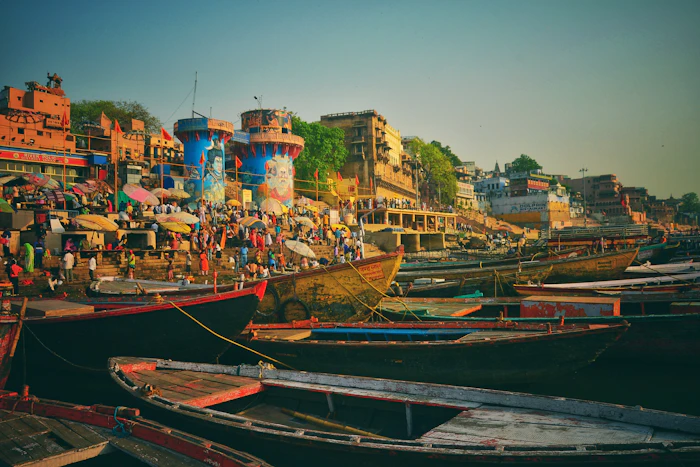
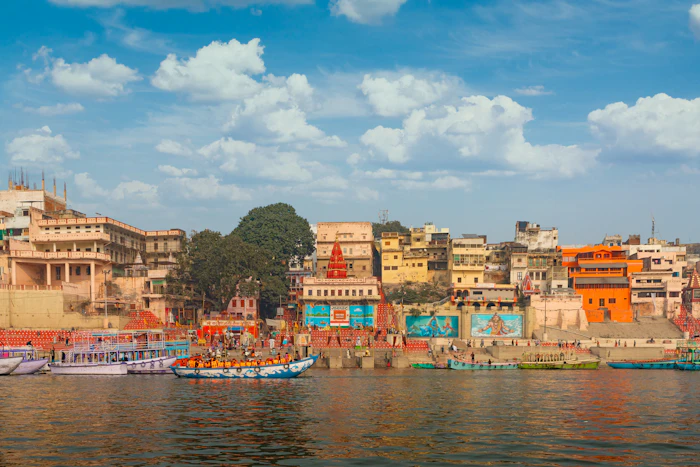
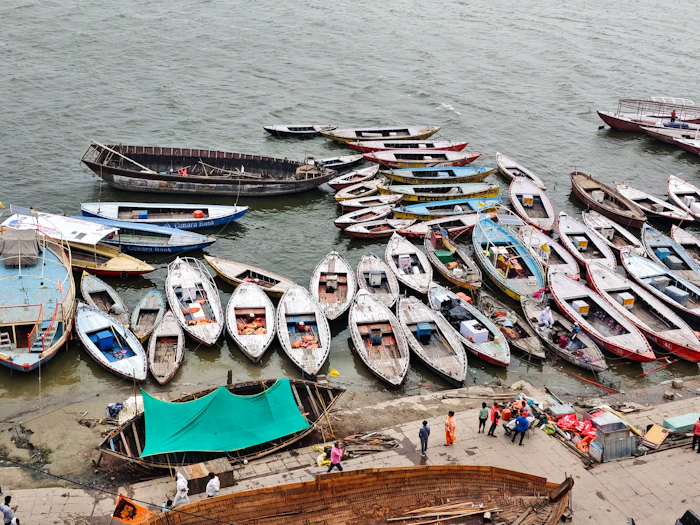
The ghats of Varanasi — eighty-eight stone steps descending to the river in a crescent three kilometres long — are not the setting of religious practice but its substance. Hindus believe that dying in Kashi releases the soul from the cycle of rebirth, which is why Varanasi's burning ghats have been lit continuously for more than three thousand years. Manikarnika Ghat burns day and night without pause, and watching from a boat on the river — the appropriate and respectful distance — is an encounter with mortality as a public, communal, and remarkably unsentimental fact.
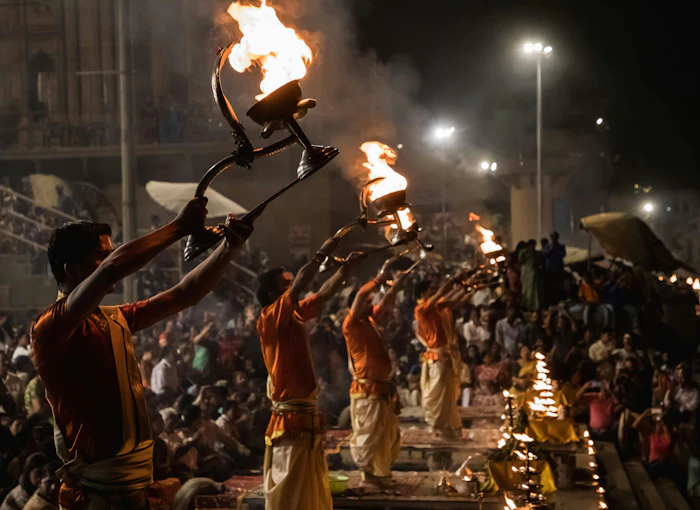
The Ganga Aarti, performed each evening at Dashashwamedh Ghat by five priests in coordinated movements with oil lamps, conch shells, incense, and fly whisks, is both genuine religious ritual and performed spectacle — and the layering of these two things is itself very Varanasi, a city that has been watched, described, and photographed by outsiders for so long that it has developed a self-consciousness about being a city that generates experiences. You leave Varanasi not understanding it better but feeling it more.
Places to Visit in Varanasi
- Dashashwamedh Ghat
- Kashi Vishwanath Temple
- Assi Ghat
- Sarnath
Things to Do in Varanasi
- Evening Ganga Aarti ceremony
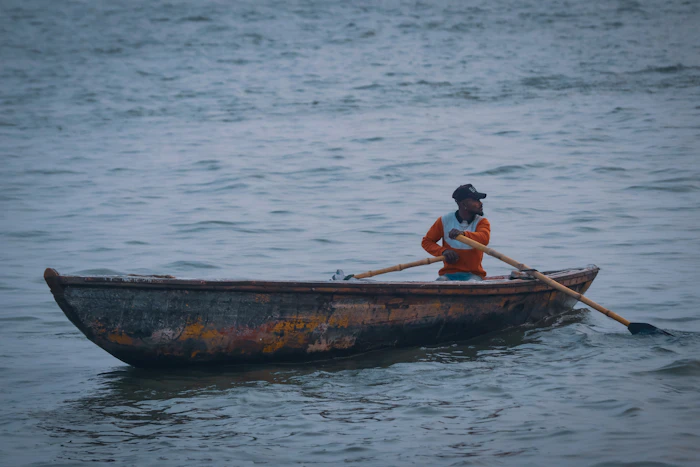
- Sunrise boat ride on the Ganges
- Old city lane walks
- Sarnath Buddhist site visit
Varanasi in Pictures
Tours Featuring Varanasi
Ready to experience Varanasi?
Tell us your dates and interests. A specialist will send a private itinerary built around Varanasi within 24 hours.
