Ladakh is not quite like the rest of India — which is saying something in a country of 28 distinct states — because it sits at an elevation and in a landscape that belongs culturally and geologically to Tibet rather than to the subcontinent it administratively occupies.
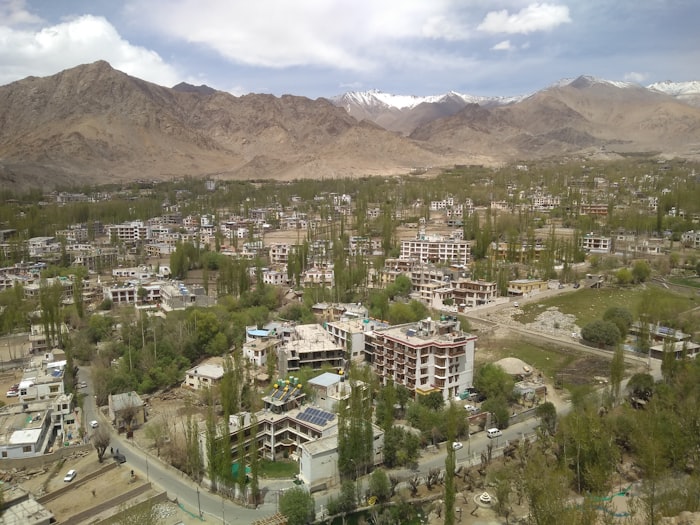
The Indus valley at Leh, where human habitation is concentrated between the 3,000-metre floor and the agricultural limit at around 4,200 metres, is an intensely cultivated strip of poplar trees and barley fields sandwiched between rock faces of extreme verticality. Immediately above this strip, the landscape resolves into high desert — high altitude, negligible rainfall, temperatures from minus 30 in winter to 35 degrees in summer — where the human presence reduces to the occasional monastery perched on ridges with the self-assurance of a building that expects to be there for another thousand years.
Alchi, the oldest monastery in Ladakh at nearly a thousand years, preserves a style of wall painting influenced by the Central Asian Buddhist tradition rather than the Tibetan one, making it unique in the entire Himalayan world. The face of the Buddha in Alchi's Dukhang has a Central Asian physiognomy — a consequence of when, not where, the monastery was built — and art historians studying the westward expansion of Buddhist iconography along the Silk Road regard it as irreplaceable evidence.
Places to Visit in Ladakh
- Leh Palace
- Pangong Lake
- Nubra Valley
- Magnetic Hill
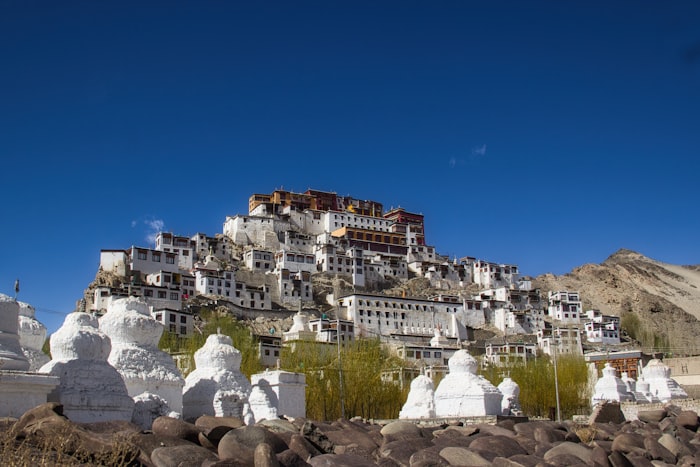
- Thiksey Monastery
Things to Do in Ladakh
- Monastery hopping around Leh
- Pangong Lake overnight camping
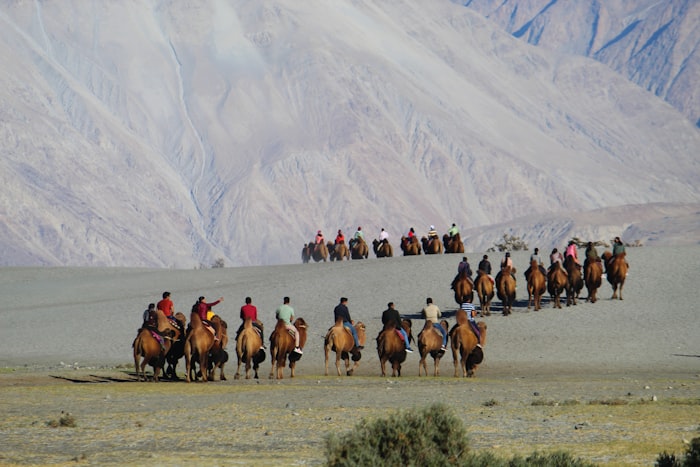
- Nubra Valley sand dune safari
- High mountain pass road trips
Ladakh in Pictures
Tours Featuring Ladakh

Ready to experience Ladakh?
See our curated tours that include this destination.