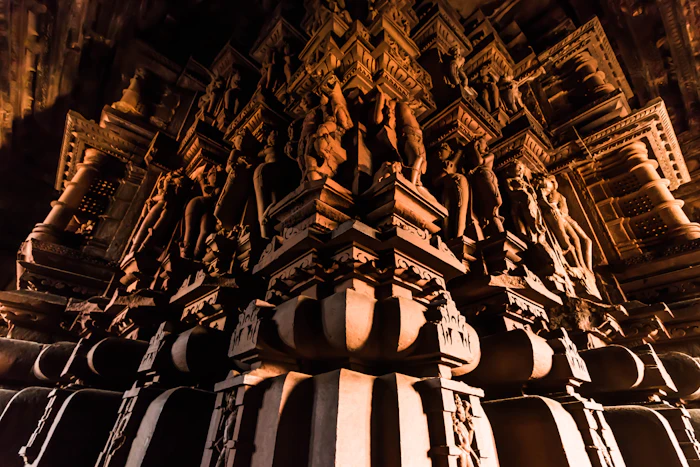
The temples of Khajuraho, built by the Chandela dynasty between 950 and 1050 AD, contain some of the finest stone carving ever produced in India — and the erotic sculptures that account for perhaps ten per cent of the total programme have been so thoroughly discussed that the other ninety per cent, which is magnificent, frequently goes unmentioned.
The apsaras — the celestial dancers who make up the majority of the temple sculptures — demonstrate an anatomical fluency and emotional specificity — the delicacy of fingers adjusting an anklet, the weight of a body caught mid-dance — that makes the stone feel inhabited rather than decorated. This is figural carving of the first order, by any standard of world art history.
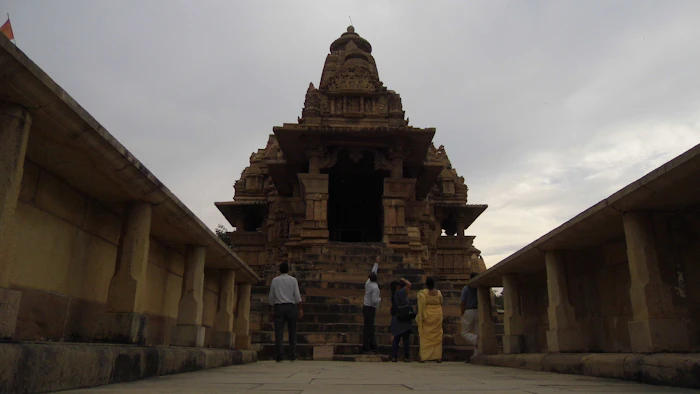
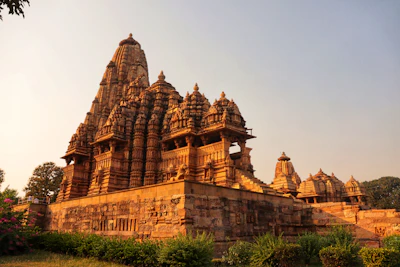
The Kandariya Mahadeva, the largest of the Western group temples, rises 31 metres in a profile of stacked spires that aspires to the mountain form that Hindu temple architecture has always used as its vertical reference. The plan, viewed from above, reveals a mathematical precision to the placement of the subsidiary shrines that only becomes clear when the logic of the Hindu cosmos they are mapping is understood.
Places to Visit in Khajuraho
- Western Group of Temples
- Eastern Group of Temples
- Khajuraho Light & Sound Show
Things to Do in Khajuraho
- Temple carving architecture tour
- Evening light and sound show
- Archaeological museum visit
Khajuraho in Pictures
Tours Featuring Khajuraho
Ready to experience Khajuraho?
Tell us your dates and interests. A specialist will send a private itinerary built around Khajuraho within 24 hours.
