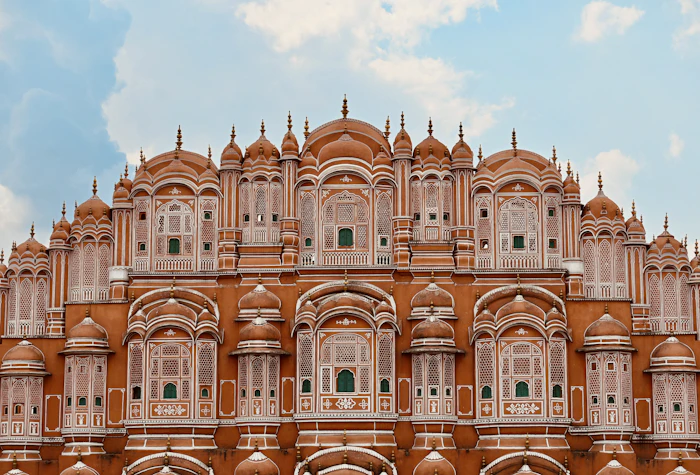
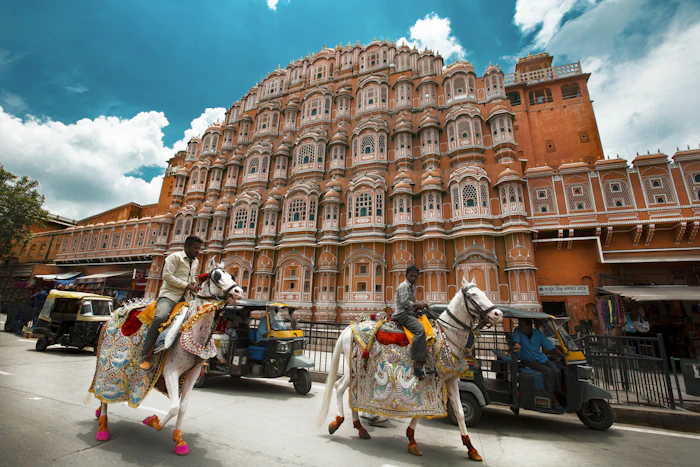
The Pink City is not a metaphor — Jaipur's old walled city is literally painted in shades of terracotta and salmon, a tradition begun in 1876 for the visit of the Prince of Wales and maintained by municipal ordinance ever since.
Jaipur was founded in 1727 by Maharaja Sawai Jai Singh II — an astronomer, military commander, and urban planner who laid his new capital out in a grid pattern derived from Vastu Shastra principles, with nine rectangular blocks representing the nine divisions of the Hindu cosmos. The Jantar Mantar observatory he built at its centre contains eighteen architectural astronomical instruments still accurate enough to tell the time within two seconds. The City Palace, still partly occupied by the royal family, gives the clearest picture of how Jaipur's particular blend of Mughal and Rajput court culture actually functioned.
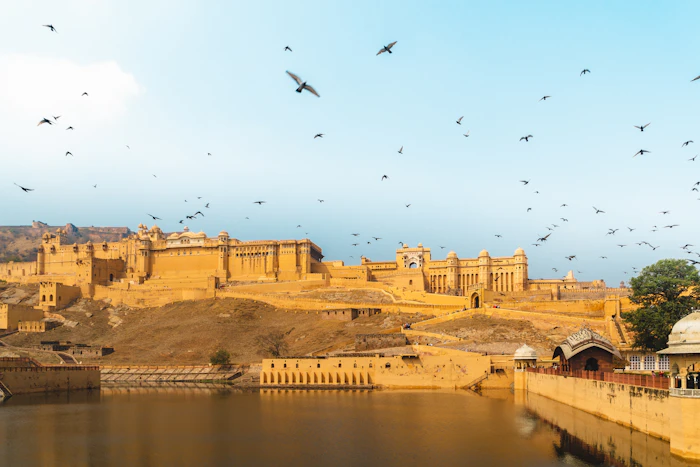
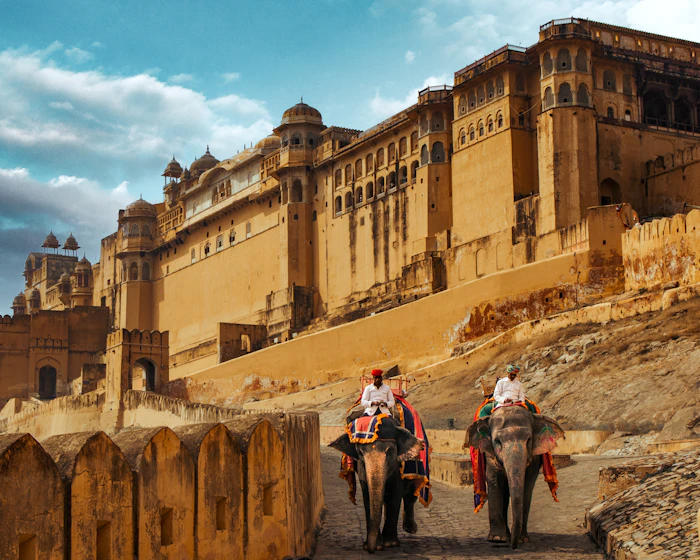
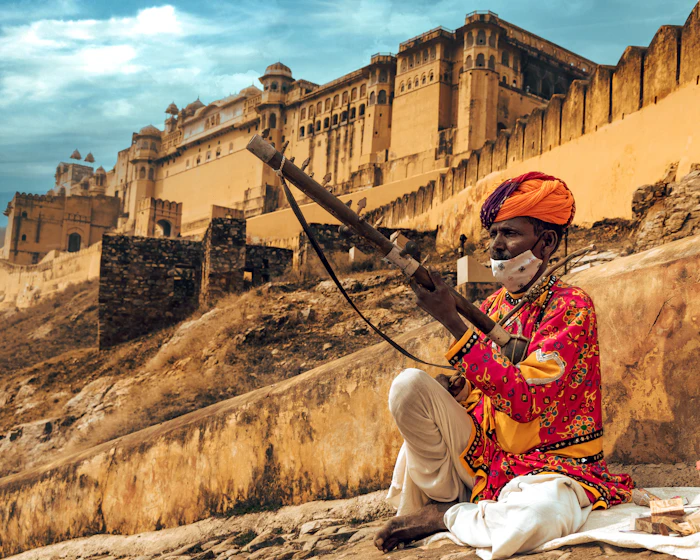
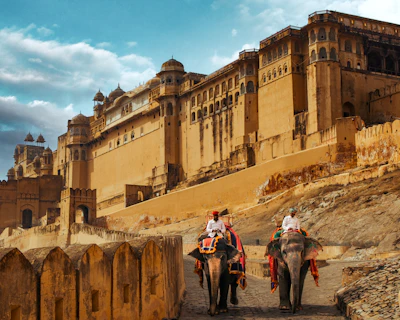
Amber Fort, twelve kilometres north, is where the older story begins: the Kachchwaha Rajput court before Jai Singh II built the new capital on the plains below. The fort climbs a ridge above Maota Lake and reflects in it on still mornings. Inside, the Sheesh Mahal — the Palace of Mirrors, in which a single lamp flame creates the illusion of a sky full of stars on the mirrored walls and ceiling — is the most theatrical room in Rajasthan. Arriving at Amber soon after it opens, before the heat and the crowds, is the kind of start that shapes the rest of the day.
Places to Visit in Jaipur
- Amber Fort
- Hawa Mahal
- City Palace, Jaipur
- Jantar Mantar
- Jal Mahal
- Nahargarh Fort
- Johari Bazaar
Things to Do in Jaipur
- Sunrise visit to Amber Fort
- Early-morning walk up to Amber's ramparts
- Block-print and gemstone shopping
- Rooftop dining with fort views
- Evening light show at Amber Fort
Jaipur in Pictures
Tours Featuring Jaipur
Ready to experience Jaipur?
Tell us your dates and interests. A specialist will send a private itinerary built around Jaipur within 24 hours.
