Fatehpur Sikri is the most complete surviving example of 16th-century Mughal urban planning — an entire imperial capital built by Akbar between 1569 and 1585, occupied for fourteen years, and then abandoned, leaving behind a city frozen at the moment of its greatest confidence.
The abandonment of Fatehpur Sikri has been attributed to water supply failure, to strategic considerations, to a rebellion, and to the fact that Akbar simply moved on to a more convenient location. The most honest answer is that historians don't agree, and the city is more interesting for the uncertainty. What is certain is that the buildings — the Panch Mahal, the Diwan-i-Khas, the Jodha Bai Palace, the Buland Darwaza — are in better condition than if the city had continued to be inhabited and modified across the following centuries.
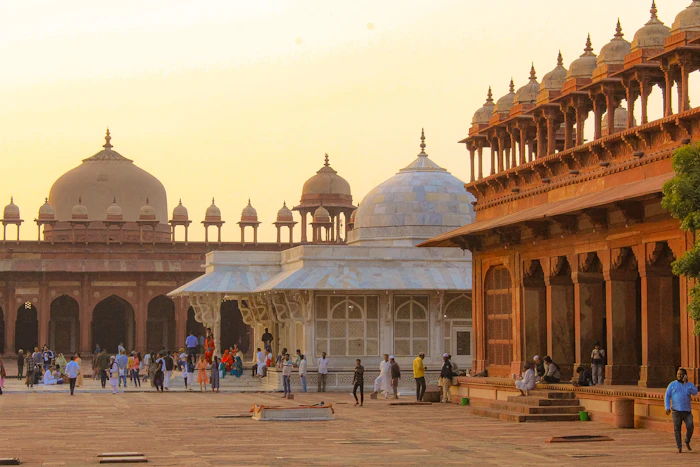
The Buland Darwaza — the Gate of Magnificence, built to commemorate Akbar's conquest of Gujarat in 1576 — rises 54 metres above the approach road in an assertion of Mughal power that is still, four and a half centuries later, one of the most imposing architectural statements in India. The Jama Masjid inside the complex, and the tomb of Sheikh Salim Chishti within it — where the Sufi saint whose blessing is credited with giving Akbar his son Jahangir is buried — continues to receive visitors seeking the same intercession.
Places to Visit in Fatehpur Sikri
- Buland Darwaza
- Jama Masjid, Fatehpur Sikri
- Panch Mahal
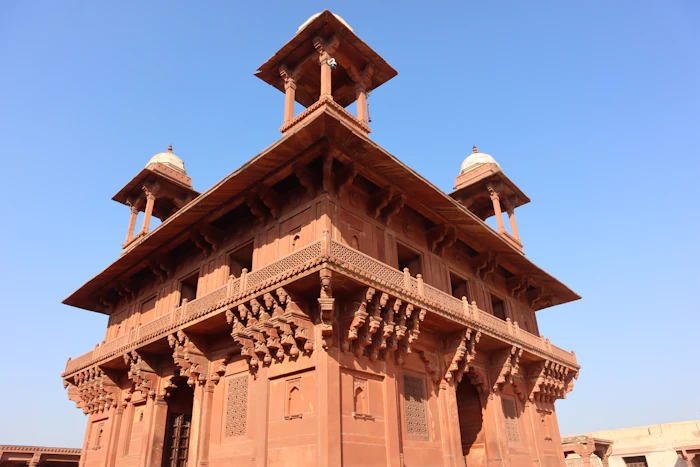
- Diwan-i-Khas
Things to Do in Fatehpur Sikri
- Guided architecture walk through the abandoned city
- Buland Darwaza gateway photography
- Tomb of Salim Chishti visit
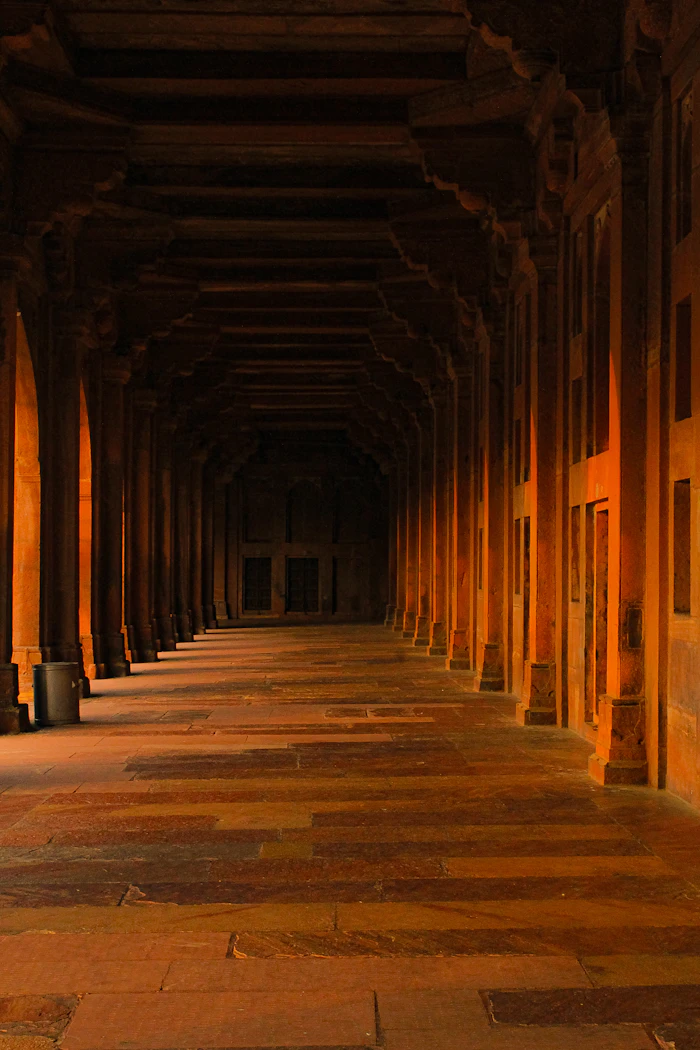
Fatehpur Sikri in Pictures
Tours Featuring Fatehpur Sikri
Ready to experience Fatehpur Sikri?
Tell us your dates and interests. A specialist will send a private itinerary built around Fatehpur Sikri within 24 hours.
