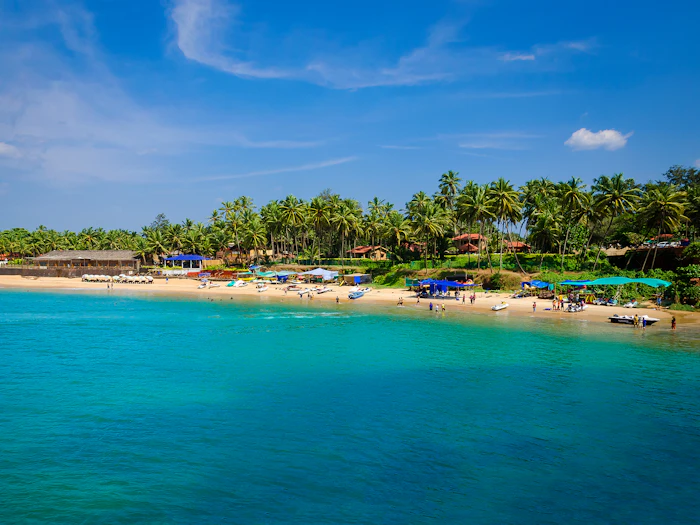
Four hundred and fifty years of Portuguese rule left Goa with Baroque churches, toddy-tapping coconut palms, and a kitchen that makes the best use of coconut vinegar in the world — a layering of influences so specific to this small coastal territory that nowhere else in India resembles it.
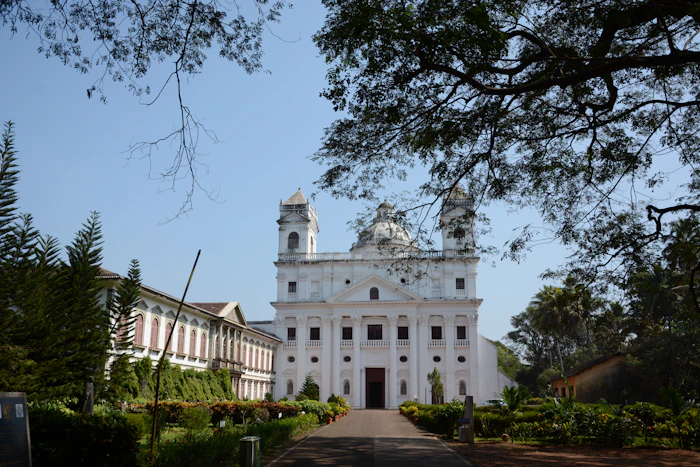
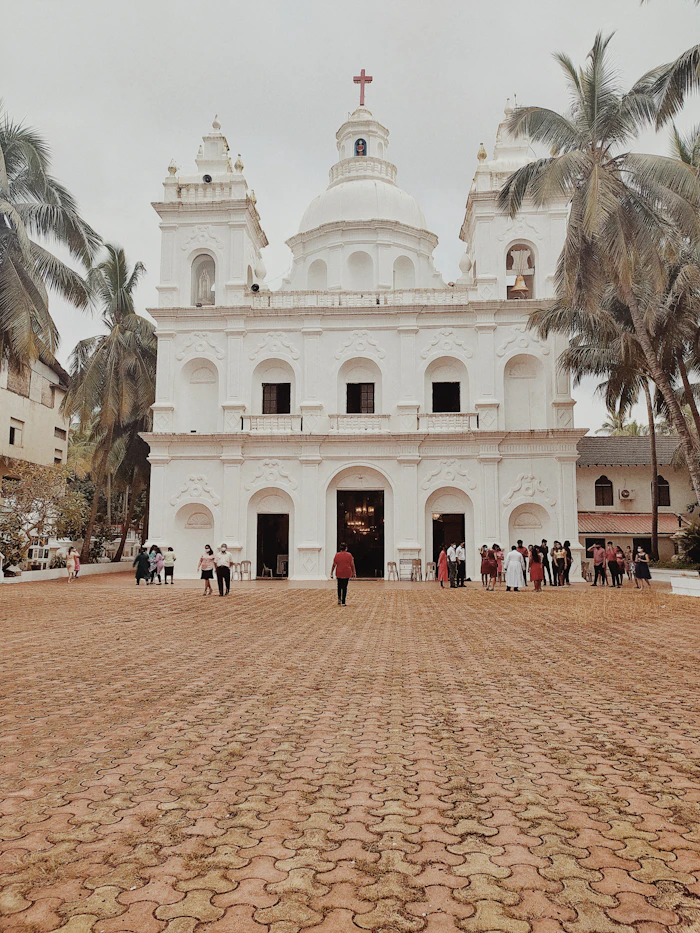
Old Goa's churches are a UNESCO World Heritage Site, and they earn the designation: the Basilica of Bom Jesus contains the preserved body of Francis Xavier, a Jesuit missionary whose remains have been here since 1554. The Sé Cathedral, the largest in Asia when built; the Church of St. Francis of Assisi; the Convent of Santa Monica — together they form a colonial religious complex with no equivalent anywhere in Asia.
Goa's food is the most useful way to understand its cultural layering. The Goan Catholic kitchen uses pork and beef in ways the Hindu north never does, makes vindaloo with the coconut vinegar that the Portuguese introduced, and bakes breads in wood-fired ovens that have been going since the colonial era. The Muslim fishing communities of the coast add their own repertoire. The hinterland — the green interior beyond the resort belt — grows the cashews, jackfruit, and coconuts that form the base of the entire cuisine.
The hinterland of Goa, almost entirely unvisited by travellers who come for the coast, is a different country: the spice plantations of the ghats, the mining landscape of the Sahyadri foothills, the village temples of the Old Conquests that predate the Portuguese churches by centuries. The waterfalls at Dudhsagar on the Karnataka border — 310 metres, among the tallest in India — are at the end of a forest track that most coastal visitors never know exists.
Goa in Pictures
Destinations in Goa
Tours Featuring Goa
Ready to experience Goa?
Tell us your dates and interests. A specialist will send a private itinerary built around Goa within 24 hours.
