Chittorgarh is the largest fort complex in India — a 700-acre plateau rising 180 metres above the Rajasthan plains, scarred by three sieges and three acts of collective self-immolation that the Rajput tradition considers among its most defining historical events.
The fort carries its history in its ruins rather than its preserved buildings, and the experience of moving through it — past ruined palaces and intact temples and the sites of three jauhar ceremonies — is one of the most emotionally weighted visits available in Rajasthan. The first sack, in 1303 by Alauddin Khilji, is associated with the legendary queen Padmini, whose self-immolation with the women of the fort has been the subject of poetry and controversy for seven centuries.
The Vijay Stambha — the Tower of Victory, built between 1448 and 1468 — is a 37-metre column decorated on every surface with Hindu iconography of such density that it has been described as a textbook of medieval Hindu art. The carvings cover all nine storeys with scenes from the Ramayana and Mahabharata, interspersed with decorative panels of such quality that individual sculptors signed their work.
Places to Visit in Chittorgarh
- Chittorgarh Fort
- Rani Padmini's Palace
- Vijay Stambha (Victory Tower)
- Kalika Mata Temple
Things to Do in Chittorgarh
- Fort ramparts walking tour
- Victory Tower climb for panoramic views
- Padmini Palace legend storytelling
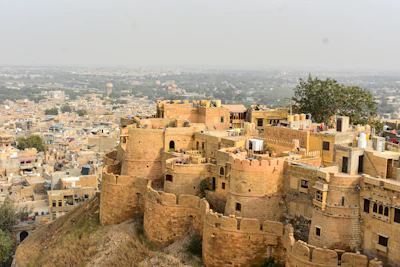
Chittorgarh in Pictures
Ready to experience Chittorgarh?
Tell us your dates and interests. A specialist will send a private itinerary built around Chittorgarh within 24 hours.
